Island routes

Flights for a long table and a slow evening.

Three modern tasting paths for drinkers who want structure without turning the room into a lecture.

Route A Harbour Light

Bright, mineral, and coastal.

Start with clean malt sweetness, light brine, citrus peel, and restrained smoke. Best for opening a tasting or resetting the palate.

  • Serve just below room temperature.
  • Add water only after the second nose.
  • Pair with oatcakes, young cheese, or salted butter.
Route B Peat Weather

Smoke, rain, wool, and stone.

A deeper path for peat-forward glasses where texture matters as much as intensity. Look for shape, not just force.

  • Compare first sip and fifth sip.
  • Track smoke as ash, rope, kelp, or hearth.
  • Keep the pour small and the water colder.
Route C Late Cask

Fruit, oak, wax, and ember.

A closing flight for richer cask influence: dried fruit, polished oak, soft spice, and the kind of finish that slows conversation.

  • Let each glass rest for ten minutes.
  • Use a wider glass for older cask profiles.
  • Pair with dark chocolate or roasted nuts.
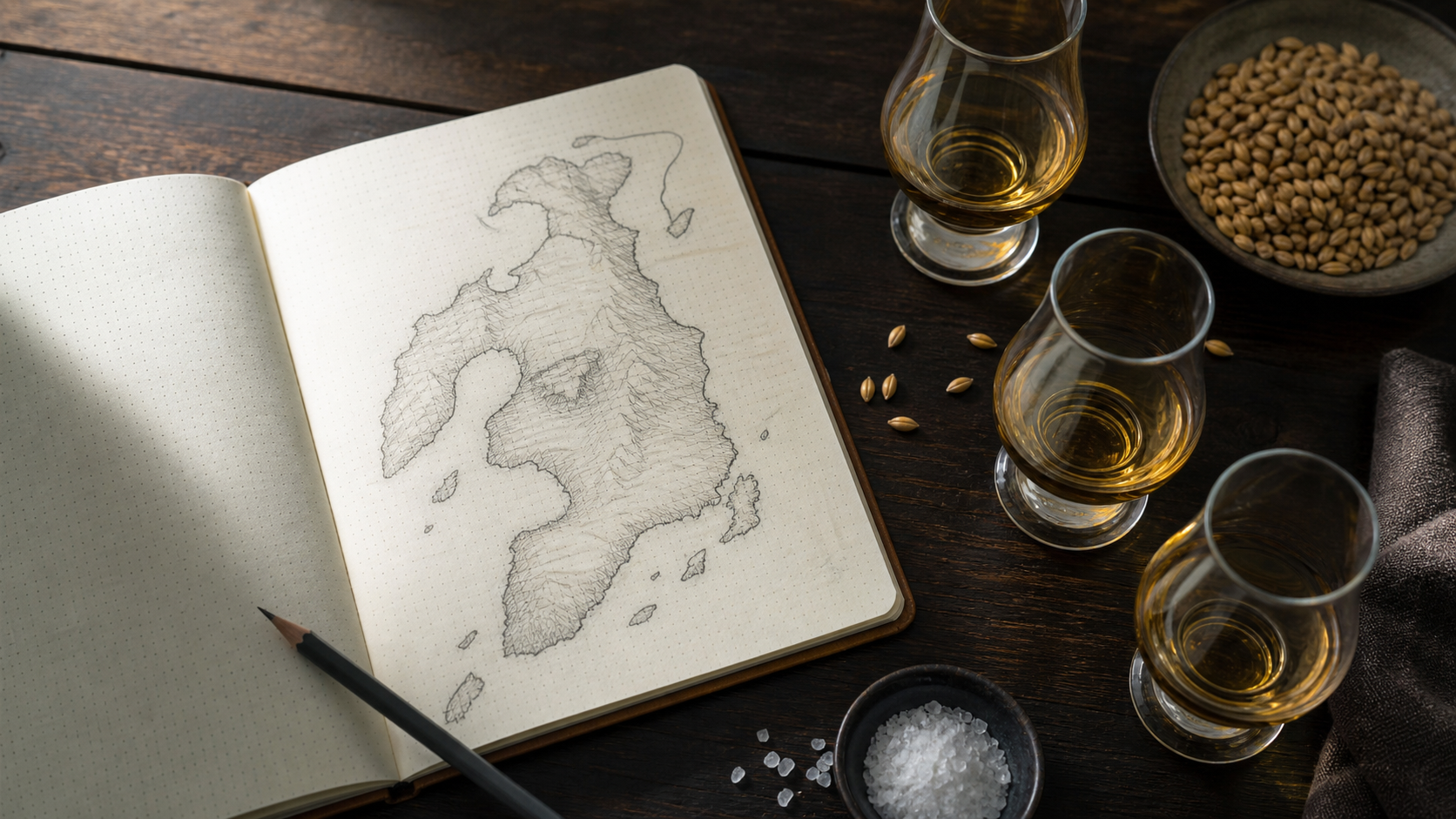
Island route notebook with tasting glasses

Notebook protocol

Keep the page simple.

Record place, weather, first aroma, texture, one memory, and the finish. The rest can wait until the next pour.